
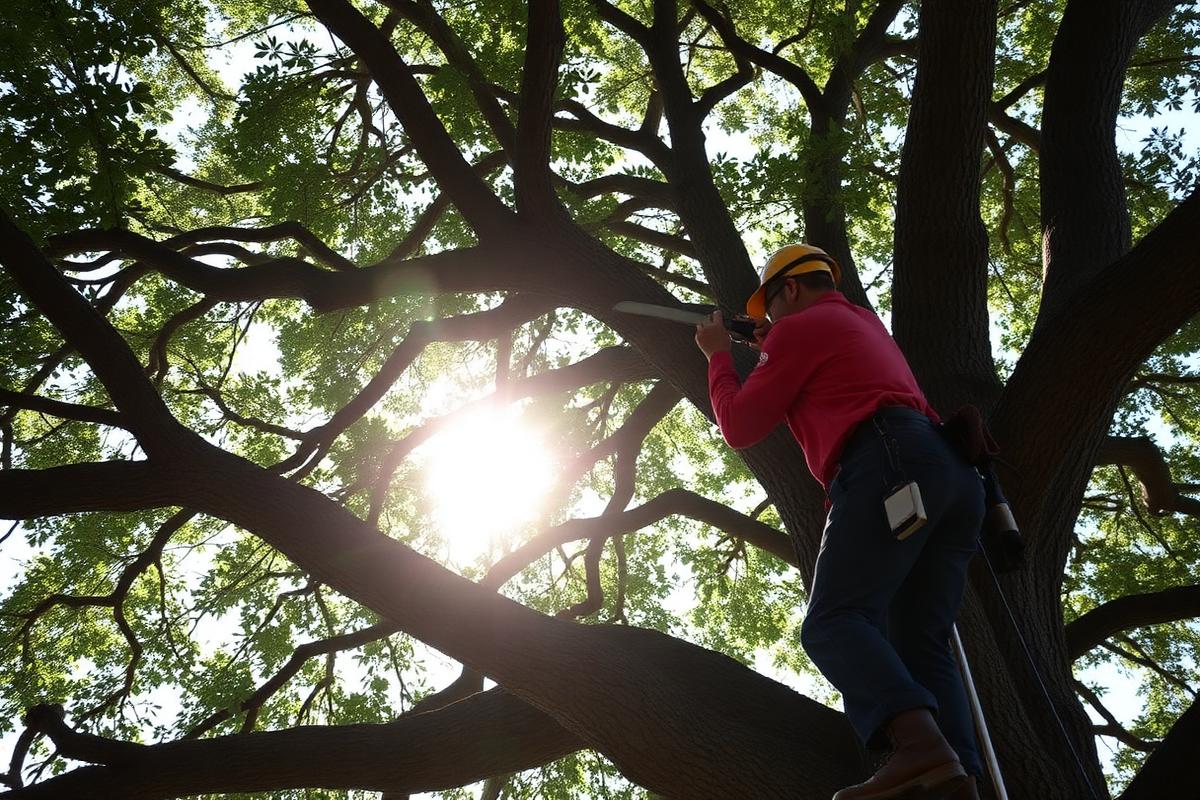
Types of pruning we quote
Most properties need a combination of the following, done on a multi-year cycle.
- Structural pruning - correcting co-dominant stems and included bark on young and semi-mature trees
- Crown cleaning - removing dead, broken, diseased and crossing limbs
- Crown thinning - modest, evenly distributed reduction of interior density to reduce wind sail
- Clearance pruning - raising the canopy off roofs, driveways, lanais and sightlines
- Restoration pruning - staged recovery for storm-damaged or previously topped trees
- Palm pruning - dead fronds and fruit stalks only, never a hurricane cut
Palms are not trees, and they prune differently
Sabal palms, queens and Washingtonias have no cambium and cannot heal a wound. Over-pruning to a narrow 'hurricane cut' removes the very fronds the palm needs to feed a new spear, and a nutrient-starved palm is more likely to snap, not less.
We take fully dead fronds, seed stalks and clearly hazardous fruit, and leave the green canopy. Where a Sabal is showing potassium deficiency - the frizzled, orange-flecked older fronds you see all over Pinellas - we will say so, because a fertility program does more than pruning ever will.
Timing in a subtropical climate
Trees here grow nearly year round, so there is no hard dormant season. Structural work is best done in late winter and early spring, before the summer flush. Deadwood and clearance can be handled any time.
The exception is oak wilt caution and general wound response: avoid heavy cuts in the middle of the wettest, most fungal part of summer where it can wait, and get storm-vulnerable trees pruned before hurricane season starts on June 1 rather than during it.
What we will not do
We do not top trees, lion-tail limbs, use climbing spikes on a tree that is being kept, or apply wound paint. Each of those causes damage that shows up two to ten years later, usually as a failure.
Common questions
Request a trimming & pruning quote
Photos and an address are enough to get started.