
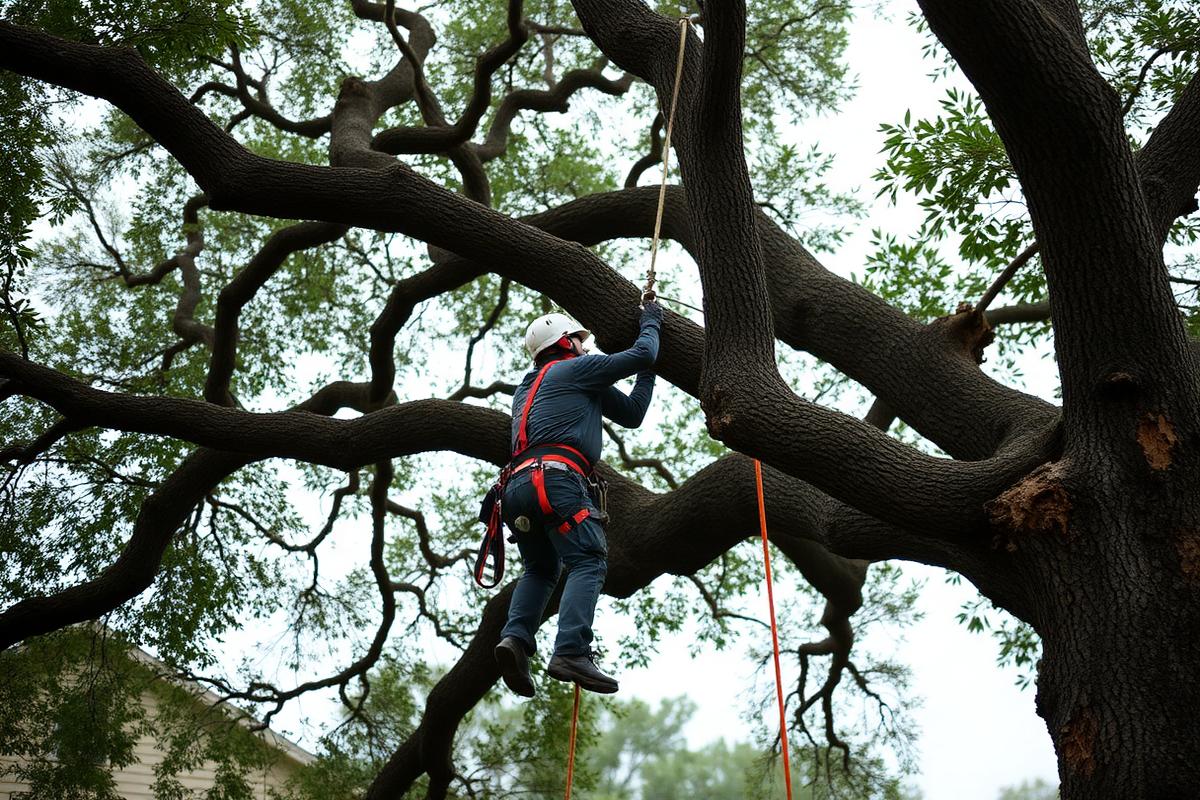
When removal is the right call
A tree is worth keeping far more often than not - canopy shades roofs, slows stormwater and holds sandy Florida soil together. Removal earns its place when the structure of the tree cannot be corrected by pruning.
- Significant root-plate lift or a lean that has changed after a storm
- Extensive decay at the base, hollow trunks, or conks and mushroom brackets at the root flare
- Laurel oaks past maturity dropping large limbs in calm weather
- Trees planted too close to a foundation, driveway, septic drainfield or seawall
- Invasive or brittle species - Brazilian pepper, camphor, earleaf acacia, silk oak, over-mature Norfolk Island pine
- Construction, addition or pool projects where the trunk sits inside the build footprint
How a removal is carried out
Where there is drop space, sections are lowered on rope from a climbing or bucket position. Where there is none, we rig each limb to a spar and set it down onto a protected landing zone. Turf and hardscape get plywood or mats under the drop area, and the crew works down the tree rather than across the yard.
Chips leave in the truck the same day unless you want them kept on site for beds - a lot of homeowners in Lutz and Wesley Chapel do.
Permits and protected trees
Florida law (§163.045) lets a homeowner remove a tree without local approval only when a qualified arborist or licensed landscape architect has documented that it presents an unacceptable risk. Outside that exemption, most Bay area jurisdictions still regulate removal - the City of Tampa protects grand trees and requires review for many removals, and Hillsborough, Pinellas and Pasco counties each apply their own tree ordinances.
Tell us the address and we will note in your quote whether the tree looks likely to fall under a local protection rule so nothing stalls mid-project.
Common questions
Request a tree removal quote
Photos and an address are enough to get started.